
How Is Credit Card Interest Calculated? A Daily Charge
Money basics explained visually. In the US, balances can be counted daily.
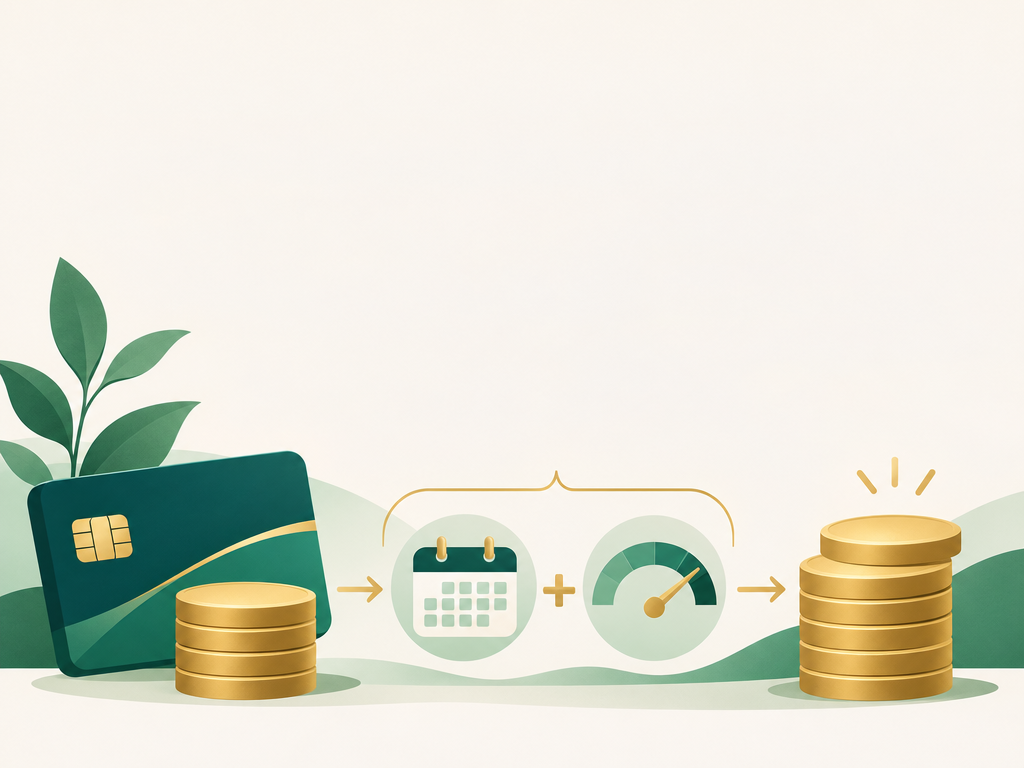
Nothing below is a calculated guess: every claim is checked against a primary source before it is made - you can see the sources at the end.
Ever looked at a credit card statement and wondered where the interest number actually came from? It isn't pulled out of thin air. If you've ever typed "how is credit card interest calculated" into a search bar, the short answer is this: the card works out an average of what you owed, then uses a yearly rate to turn that average into dollars. Let's walk through it one step at a time.
Step one: the card counts your balance every day
In the US, credit card balances can be counted daily. Picture the card company glancing at your account each evening and jotting down what you owe right then.
Spend a bit on Monday and your balance goes up for that day. Make a payment on Thursday and it goes down from then on. Every day of the billing cycle gets its own entry, a bit like a diary of your balance.
Step two: turn all those days into one average
At the end of the billing cycle, the card adds up every one of those daily balances and divides by the number of days. This method has a name: the average daily balance.
Think of it like working out your average mood over a week. You don't just look at your best day or your worst day. You add up every day and divide by the number of days. The card does the same thing with your balance.
That average is the balance the card charges interest on. And because payments and credits are taken off day by day, they lower your balance for every day that's left in the cycle.
Step three: the yearly rate turns that balance into dollars
Now the rate comes in. On your statement, the rate is shown as a yearly figure called the APR, which stands for annual percentage rate. The statement has to list every rate the card may use to work out your interest charge, written as an APR.
The rate is what turns that average balance into an actual dollar amount. That dollar amount is called the finance charge, which is simply the cost of borrowing, written in dollars.
Here's a handy way to picture it. The average balance is the ingredient, the APR is the recipe, and the finance charge is what comes out of the oven.
Your statement has to show its working
You don't have to take any of this on trust. The statement must show the balance the rate was applied to. It also has to explain how that balance was worked out.
So if you're ever puzzling over how is credit card interest calculated on your own card, the statement is where the card has to show its working. It's like a maths teacher who wants the steps, not just the final answer.
The grace period: the date that changes everything
Most cards come with a grace period. That's the date by which the new balance, or any part of it, has to be paid to avoid extra finance charges.
Here's how it works. When the new balance is paid by that date, no extra finance charge is added. Think of it like a library book returned on time: no late fee.
Why the day of a payment matters
This is where it all comes together. Because the balance is counted daily and payments come off day by day, the day a payment lands changes the average.
Picture a payment made early in the cycle. It lowers the balance for lots of days, so the average drops a lot. The same payment made near the end only lowers a few days, so the average barely moves.
So the day you pay moves the average. And since the average is what the rate gets applied to, it also moves the dollars you're charged. Count the days, average them, apply the rate, and the mystery number on your statement suddenly makes sense.
Sources
Each statement in the film was checked against its own source before it was made:
- One named method for working out the balance adds your outstanding balance for each day in the billing cycle and divides by the number of days - the average daily balance, and payments and credits are deducted day by day. - ecfr.gov
- The statement must show the amount of the balance the rate was applied to, and explain how that balance was determined. - ecfr.gov
- The statement must show each rate the card may use to compute the interest charge, expressed as an annual percentage rate. - ecfr.gov
- The grace period is the date by which the new balance, or any portion of it, must be paid to avoid additional finance charges. - ecfr.gov
- The finance charge is the cost of the credit stated as a dollar amount. - ecfr.gov
What this is not
This is an explanation of a money mechanic, not financial advice. There are no recommendations, no products, no predictions, and no promise about what any amount of money will do. The film shows the arithmetic of a rule that has been used for a long time; what you do with it is your own decision.
Watch it
This post accompanies the film: How Is Credit Card Interest Calculated? A Daily Charge
Sources checked at time of publication. Educational content only - never financial advice.