
Needs Vs Wants: The Same Dollar, Two Labels
Money basics explained visually. Saving is officially a need, not a want.
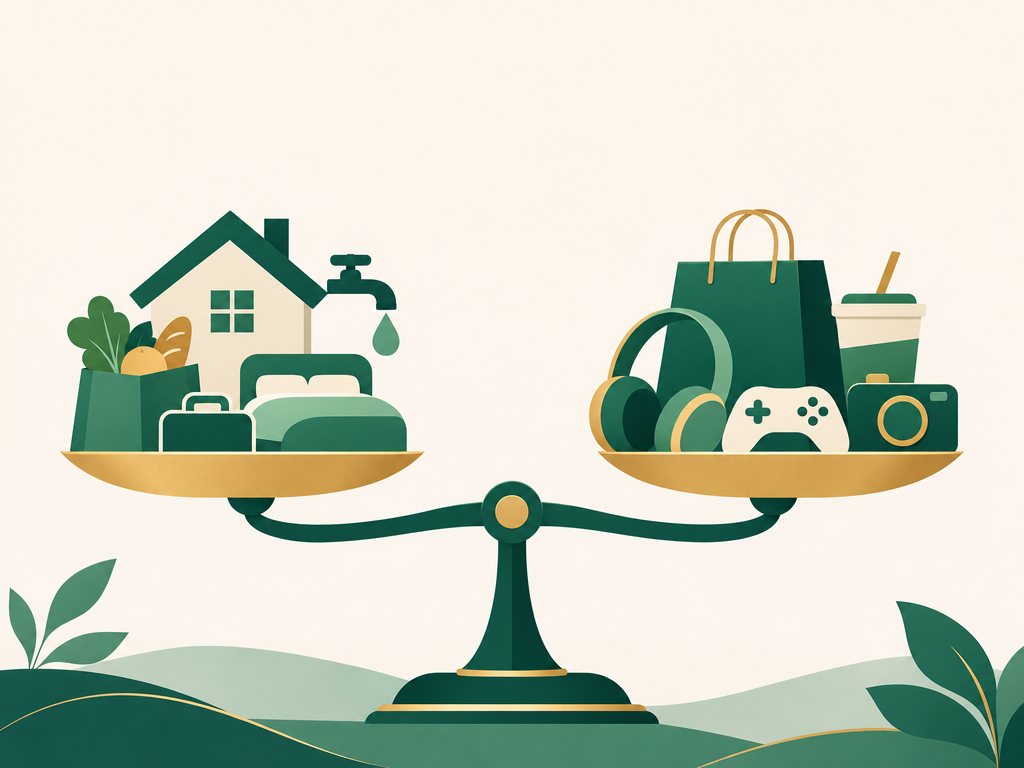
In the official version of needs vs wants, putting money into savings counts as a need. It's not a treat or a bonus, and it isn't something you only do once the fun stuff is paid for. A federal agency writes both definitions, and once you see how it draws the line, your whole budget starts to look different.
What counts as a need?
The basic definition is simple. Needs are the things you must have to survive. Think food, clothing and shelter.
Picture a bare-bones week: a roof over your head, something to eat and clothes on your back. Every one of those is a need. Without them, life falls apart quickly.
But the official definition doesn't stop at survival. It goes further than most people expect, and that's where it gets interesting.
The needs that surprise people
The same definition also counts the things you may need to do your job. Its examples are reliable transportation and the tools of your trade.
So if you can't get to work without dependable transport, that transport is a need. If your job can't be done without certain tools, those tools are needs as well. They're how the money comes in at all.
Then comes the big one. The definition also counts resources that build and protect your money so you can meet future needs. Its examples are emergency savings and insurance.
That's why saving counts as a need. Today's food keeps you going today. Emergency savings and insurance are there to keep you going when something goes wrong later.
So what's a want?
Wants are upgrades: things that are nice but not necessary. The official wording calls them things that would be nice to have but aren't needed for living, for earning an income or for protecting what you have.
The definition's own three limbs give the test: does it keep you alive, keep you earning, or keep you protected? If the answer is no and it's just nicer, it's a want.
Wants aren't bad. The label is simply honest about what a thing is for.
One lunch, two labels
This is where it gets a bit sneaky. The official statistics file food under two separate labels.
The first is "food at home." That means food from grocery stores, or food you make yourself, even on a trip. A sandwich you pack at home goes under this label.
The second is "food away from home." That's the same kind of meal bought ready-made: fast food, take-out, delivery, cafeterias, sit-down restaurants and vending machines. A sandwich from the work cafeteria goes here.
Same lunch, different label. Food itself is a need, but how you get it can change what kind of spending it is. Once you notice that, the line between needs vs wants starts to run straight through ordinary days.
The biggest need of all
If you want to see how much a single need can weigh, look at housing. It was the largest single share of US household spending in 2025.
The figure was $27,790 per consumer unit (think of it as a household). That's 33.9 percent of total average yearly spending.
Put simply, housing alone takes about a third of the spending. Shelter is a need, and it's also the biggest single thing in the budget.
Why the label matters
Labels can sound like paperwork, but they do real work. When a month gets tight, the label decides what survives.
Needs are the things that hold everything else up: food, shelter, the tools that bring in your income, and the savings and insurance that protect it. Wants are the upgrades sitting on top.
That's the whole idea. Once you know which is which, you can see why saving sits in the same group as a roof and a meal, and why the cafeteria sandwich and the packed one aren't quite the same thing.
Sources
- A need is defined as the basic things people must have to survive, such as food, clothing, and shelter. - consumerfinance.gov
- The same definition also counts resources you may need to do your job, such as reliable transportation and the tools of the trade. - consumerfinance.gov
- The same definition also counts resources that build and protect your money so you can meet future needs, such as emergency savings and insurance. - consumerfinance.gov
- A want is defined as upgrades and other things that would be nice to have but are not necessary for living, income, or protecting what you have. - consumerfinance.gov
- A want is an upgrade or another nice-to-have rather than something required. - consumerfinance.gov
- The official statistics file food under two separate labels: food at home is food from grocery stores, or food the household prepares itself, including on trips. - bls.gov
- The other label, food away from home, is the same meals bought out: fast food, take-out, delivery, cafeterias, full-service restaurants and vending machines. - bls.gov
- Housing was the largest single share of US household spending in 2025: $27,790 per consumer unit, 33.9 percent of total average annual expenditures. - bls.gov
What this is not
This is an explanation of a money mechanic, not financial advice. There are no recommendations, no products, no predictions, and no promise about what any amount of money will do. The film reports how two labels are defined and what the US statistics file under them; how you label your own spending is your decision.
Watch it
This post accompanies the film: Needs Vs Wants: The Same Dollar, Two Labels
Sources checked at time of publication. Educational content only - never financial advice.