
What Is A Bond? A Loan You Can Sell
Money basics explained visually. What is a bond? A loan you sell.
Nothing below is a calculated guess: every claim is checked against a primary source before it is made - you can see the sources at the end.
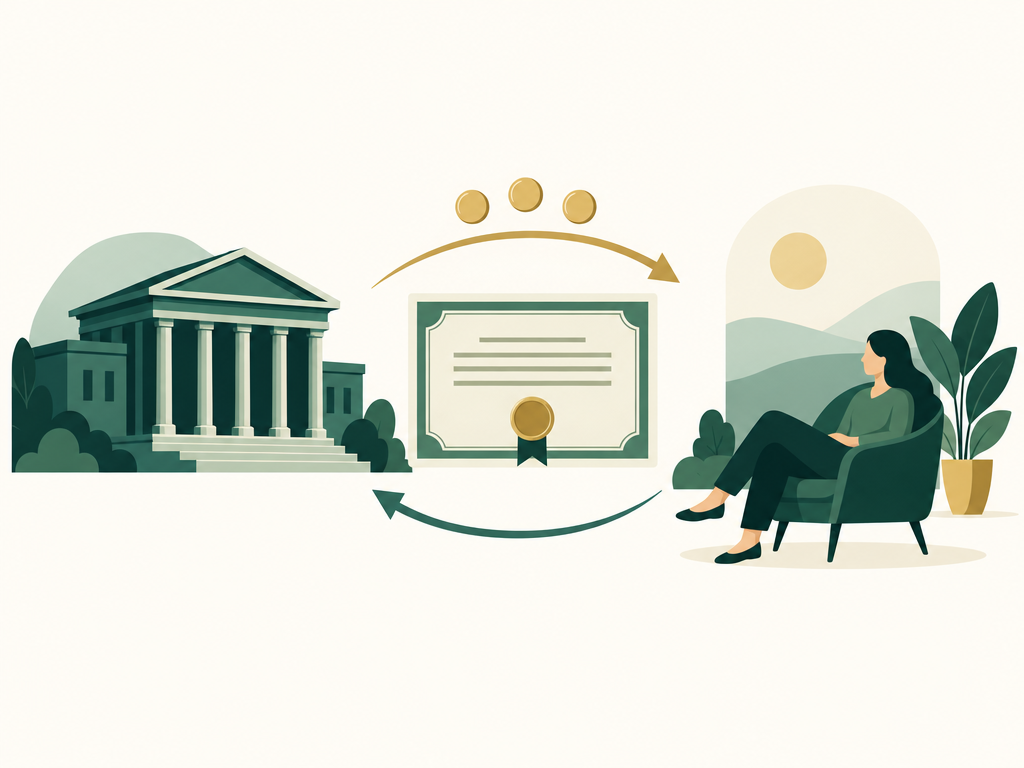
If you have ever typed "what is a bond" into a search bar, here is the shortest answer: a bond is a loan you sell. You lend your money to someone, they promise to pay you for it, and you have a piece of paper that says so. Then comes the twist that surprises most beginners. You don't have to hold on to that loan. You can sell it to someone else.
A bond is an IOU with your name on it
Picture a friend who needs cash. They borrow from you and write "I owe you" on a slip of paper. A bond works the same way, just on a much bigger scale. In money terms it's called a debt security, and it's basically a formal IOU.
The borrowers here aren't friends. They're governments, municipalities (your local city or town) and corporations. They issue bonds to raise money from investors who are willing to lend to them for a set amount of time.
So when you buy a bond, you aren't buying a slice of a company. You're the lender. The government, town or company that issued the bond is the borrower, and it owes you.
What you get for lending your money
Nobody lends money for free, and a bond doesn't ask you to. The issuer promises to pay you a specified rate of interest for the whole life of the bond. That interest is your reward for handing over your cash.
Interest usually arrives on a regular schedule, for example every six months. Think of a rent cheque that turns up on time, again and again, while the loan is still running.
Then there's the big moment at the end, called maturity. That's the day the loan finishes and the issuer pays back your principal, which is the original amount you lent. You'll also hear it called the face value or par value. They're three names for the same money: what you put in comes back to you.
You don't have to wait until the end
This is where the "loan you sell" part comes in. Say you lent your money for a long stretch, but partway through you'd like the cash back. You don't have to sit and wait for maturity. You can sell the bond to someone else before then.
Whoever buys it takes your place as the lender. From then on they get the interest payments and the principal at maturity. You walk away with whatever they paid you.
Here's the catch. If you sell a bond before maturity, it may be worth more or less than its face value. The price you get isn't locked in. It depends on what a buyer will pay on the day you sell.
Why rising interest rates can shrink a bond's price
Picture two bonds side by side. One is your older bond, which pays a lower rate of interest. The other is a brand-new bond, issued after interest rates went up, so it pays a higher rate.
If you were the buyer, which would you pick at the same price? The new one, of course, because it pays you more. When rates rise, newly issued bonds get more appealing than the older ones.
So to sell your older, lower-rate bond, you might have to lower the price and sell it at a discount. That's how a bond you were perfectly happy with can end up worth less to a buyer. Nothing went wrong with the borrower. The world around your bond simply changed.
The risk: a loan can fail
Remember your friend with the IOU? Sometimes a friend can't pay you back. Bonds work the same way. The issuer may fail to make its interest or principal payments on time.
When that happens, it's called a default. The promise on the IOU gets broken, and the regular interest or the money you were expecting at maturity may not turn up as planned.
So if someone asks you what is a bond, the honest full answer is simple. A bond is a loan. It pays you interest, it can be sold before it ends, its price can go up or down, and, like any loan, it can fail.
Sources
Each statement in the film was checked against its own source before it was made:
- A bond is a debt security, like an IOU: borrowers issue bonds to raise money from investors willing to lend them money for a certain amount of time - investor.gov
- When you buy a bond you are lending to the issuer, which may be a government, municipality, or corporation - investor.gov
- The issuer promises to pay you a specified rate of interest during the life of the bond, and to repay the principal - also called face value or par value - when the bond matures - investor.gov
- Typically, bonds pay interest on a regular schedule, such as every six months - investor.gov
- If a bond is sold before maturity, it may be worth more or less than the face value - investor.gov
- Rising interest rates make newly issued bonds more appealing, because the newer bonds carry a higher rate than older ones, so to sell an older bond with a lower interest rate you might have to sell it at a discount - investor.gov
- The issuer may fail to make timely interest or principal payments, and thus default on its bonds - investor.gov
What this is not
This is an explanation of a money mechanic, not financial advice. There are no recommendations, no products, no predictions, and no promise about what any amount of money will do. The film shows the arithmetic of a rule that has been used for a long time; what you do with it is your own decision.
Watch it
This post accompanies the film: What Is A Bond? A Loan You Can Sell
Sources checked at time of publication. Educational content only - never financial advice.