
What Is A Subsidy? Money Behind The Price
Money basics explained visually. What is a subsidy? Money behind the price.
Nothing below is a calculated guess: every claim is checked against a primary source before it is made - you can see the sources at the end.
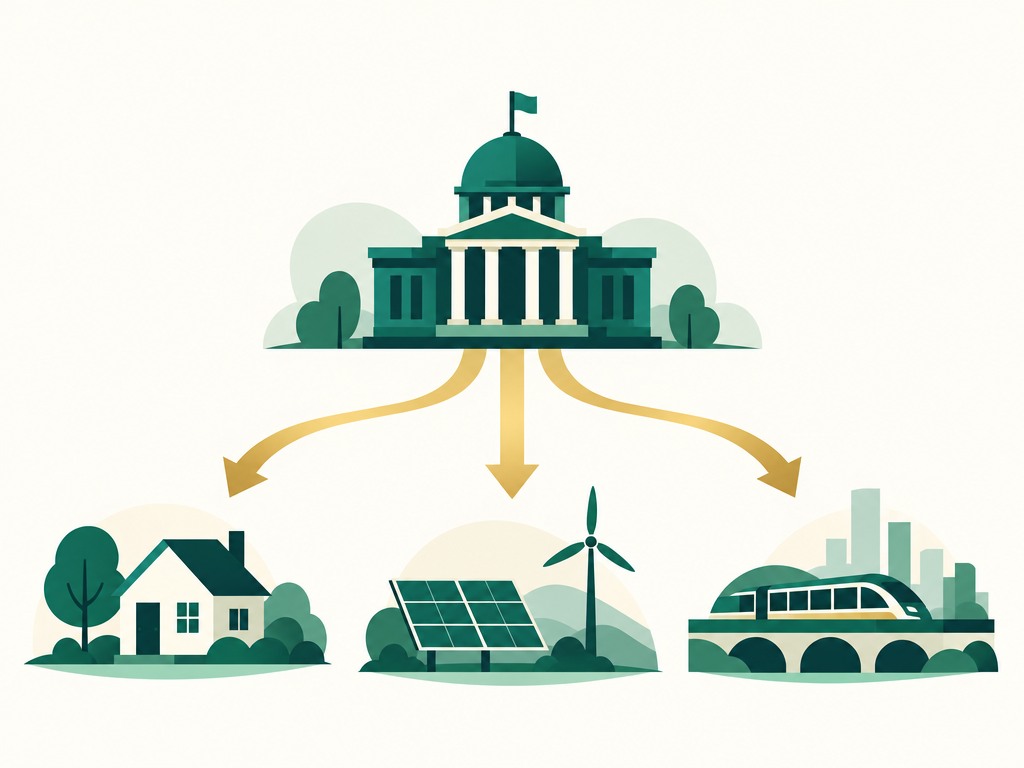
You pay a price for almost everything you buy. Sometimes, though, there's extra money behind that price that you never see. If you've ever wondered what is a subsidy, that's the short answer: money behind the price. A government quietly helps cover part of the cost of something, either by handing over money or by choosing not to collect money it would normally get. Let's walk through how that works.
The basic idea: a government chips in
Trade rules start with a simple test. A subsidy exists where there is a financial contribution by a government or any public body. In plain English, the government puts something of value into the deal.
Think of a friend who helps you buy a bike. You still pay the shop, but your friend has helped behind the scenes. A subsidy works the same way, except the helper is a government and the help goes to a business, a product or a whole market.
That "financial contribution" can take more than one shape. The rules describe a couple of routes, and they look very different from each other.
Route one: the government hands over money
The most obvious route is a direct transfer of funds. Money moves from the government to someone else. The rules name a few common forms: grants, loans and an equity infusion.
A grant is money given outright. Picture a government giving a small factory money to get started. The factory doesn't pay it back.
A loan is money lent that has to be repaid. It still counts, because the government is putting its own money to work for someone else.
An equity infusion sounds fancy, but it just means the government puts money into a company in exchange for a share of it. Imagine the government becoming a part-owner of that factory by investing in it. Each of these is money going out of the government's pocket.
Route two: the government doesn't collect money it's owed
The second route is sneakier. Here, no money gets handed over at all. Instead, government revenue that is otherwise due is forgone, which means it simply isn't collected.
The classic example is a tax credit. Say a business would normally owe a certain amount of tax. If the government gives it a tax credit, that bill shrinks. Nothing was sent out, but the business still ends up better off.
Trade rules say tax credits count as a financial contribution, just like a grant does. So when you ask what is a subsidy, the answer covers money the government gives up as well as money it hands out.
Why the US calls them "tax expenditures"
US tax law has its own name for this second route: tax expenditures. It describes them as revenue losses from parts of the Federal tax laws that give certain people or activities special treatment.
That special treatment comes in several flavours. Some income can be left out entirely, or exempted from tax. Some costs can be deducted, which shrinks the income you're taxed on. There can also be a special credit, a lower (preferential) tax rate, or permission to pay a tax bill later instead of now, which is called a deferral.
Here's the key point. Where the subsidy is a tax incentive, the government doesn't spend any money, but it loses revenue it would otherwise have received. It's a bit like a shop owner giving a friend a discount. No cash leaves the till, but less cash comes in.
How to spot a subsidy: one US test
So how do you tell a subsidy apart from ordinary government activity? One US test boils it down to three things. A federal subsidy provides a financial benefit, has an identifiable federal budget impact, and is specifically targeted at a market.
Benefit means someone ends up better off. Budget impact means it shows up in the government's money, either as spending or as revenue it didn't collect. Targeted at a market means it's aimed at a particular area, not spread evenly across everyone.
Put those three together and the hidden help becomes visible. Whether it's a grant, a loan, a stake in a company or a tax break, a subsidy is always some form of government money sitting behind the price.
Sources
Each statement in the film was checked against its own source before it was made:
- A subsidy exists where there is a financial contribution by a government or any public body - wto.org
- One form of financial contribution is a direct transfer of funds, such as grants, loans and equity infusion - wto.org
- Another form is government revenue that is otherwise due being forgone or not collected, such as tax credits - wto.org
- US tax law describes these as revenue losses from provisions of the Federal tax laws that allow a special exclusion, exemption, or deduction from gross income, or a special credit, a preferential rate of tax, or a deferral of tax liability - home.treasury.gov
- Where the subsidy is a tax incentive, the government does not spend money, but it loses revenue that it would otherwise have received - eia.gov
- A federal subsidy provides a financial benefit with an identifiable federal budget impact and is specifically targeted at a market - eia.gov
What this is not
This is an explanation of a money mechanic, not financial advice. There are no recommendations, no products, no predictions, and no promise about what any amount of money will do. The film shows the arithmetic of a rule that has been used for a long time; what you do with it is your own decision.
Watch it
This post accompanies the film: What Is A Subsidy? Money Behind The Price
Sources checked at time of publication. Educational content only - never financial advice.