
Why Is Everything So Expensive? Prices Rarely Come Back
Money basics explained visually. Your prices went up. They stayed up.
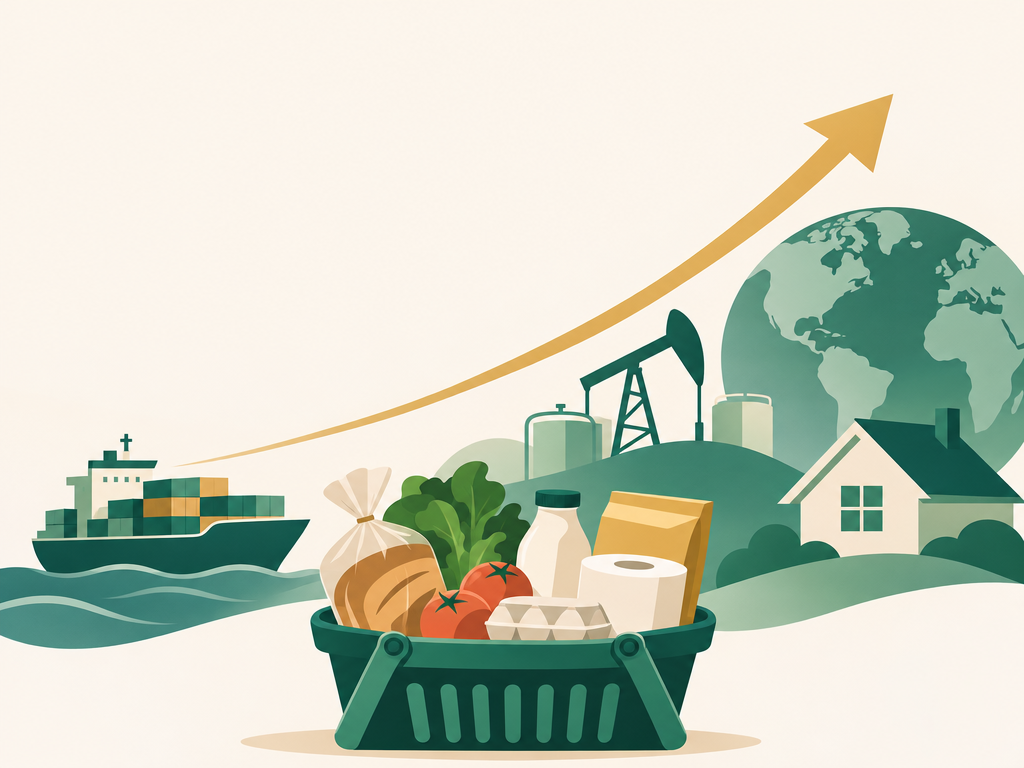
Nothing below is a calculated guess: every claim is checked against a primary source before it is made - you can see the sources at the end.
If you've ever stood at a checkout and wondered "why is everything so expensive", you're not imagining it. Your prices went up. Then they stayed up. The old price you remember almost never came back. A simple mechanic sits behind that, and once you see it, a lot of everyday frustration starts to make sense.
Meet the price ratchet
A ratchet is a tool that turns easily one way and locks against the other. Think of a zip tie. It's easy to pull tighter, but it won't slide back loose.
Prices often behave the same way. They step up, and they rarely step back. Call it the price ratchet.
The interesting question isn't only why prices rise. It's why they so rarely fall back down afterwards. Let's look at how that works.
Prices only move at review time
Most people never think about this, but many businesses don't change their prices whenever they feel like it. They review them on a schedule. Surveys of service firms in Europe found that most of them review and change their prices once a year.
Picture a local gym or a hair salon. They set their price list, then leave it alone until the next review. Between reviews, the price holds still.
That has a hidden side effect. Even if something changes that could justify a lower price, a cut usually waits for that review. So prices don't drift down smoothly. They stay locked in place until someone decides to change them.
What pulls a price back down?
So when review time comes, what makes a business lower its price? You might guess costs. If materials get cheaper, surely the price drops too?
Not quite. When surveyed European firms set prices, they watched their competitors' prices most closely. That came ahead of their own supply costs, and ahead of demand from customers.
Think about a café on a busy street. If the main thing it watches is the café across the road, and that rival keeps its prices where they are, there's not much pulling this café's price down either. Rivals matter more than costs, and more than demand.
What a price index actually measures
You'll often hear about prices through a price index. It sounds technical, but the idea is simple. A price index tracks the level of prices, meaning where they sit compared with a starting point.
Imagine a basket of everyday things priced at $100 in the starting period. Later, the same basket costs $107. That's a 7 percent increase. In index terms, one hundred becomes one hundred seven.
The same logic works for any reading. If an index sits at 110, prices are 10 percent above the reference period. It tells you how high prices have climbed, not just how fast they're climbing right now.
That links back to the ratchet. If prices step up and rarely step back, the level they've reached tends to stay there. That's one plain answer to why is everything so expensive: the steps up stick around.
Why your prices might not match the average
Here's a twist. A price index is a statistical average, so it may not reflect your own experience. That average may not match yours.
Say you rent, drive a lot and eat out often. Your neighbor works from home and cooks every night. You buy very different things, so the prices you each feel can be quite different from the average.
It also means some prices can fall while the average rises. A sharp jump in one area can be offset by lower prices somewhere else. So you might notice a few things getting cheaper even as the headline figure climbs.
The ratchet in a nutshell
Put it all together and you get this pattern. Many businesses only revisit prices at set reviews, so between reviews prices hold still. When they do review, they look hardest at their rivals, more than at costs or demand. And a price index records the level prices have reached.
That's the price ratchet. Prices step up. They rarely step back.
Sources
Each statement in the film was checked against its own source before it was made:
- A base-period basket priced at $100 rising to $107 is a 7 percent increase. - bls.gov
- A price index measures the LEVEL of prices, so an index of 110 means prices sit 10 percent above the reference period. - bls.gov
- The index is a statistical average, so it may not reflect one household's own experience. - bls.gov
- Sharp price increases in one area can be offset by lower prices in other areas, so some prices do fall while the published average rises. - bls.gov
- Most services firms review and change prices once a year. - ecb.europa.eu
- When firms set prices they watch their competitors' prices most closely, ahead of supply costs and demand. - ecb.europa.eu
What this is not
This is an explanation of a money mechanic, not financial advice. There are no recommendations, no products, no predictions, and no promise about what any amount of money will do. What you do with the information is your own decision.
Watch it
This post accompanies the film: Why Is Everything So Expensive? Prices Rarely Come Back
Sources checked at time of publication. Educational content only - never financial advice.